a r t w o r k a v a i l a b l e e x c l u s i v e l y A S c a n v a s p r i n t s I N R A N G E O F S I Z E S .
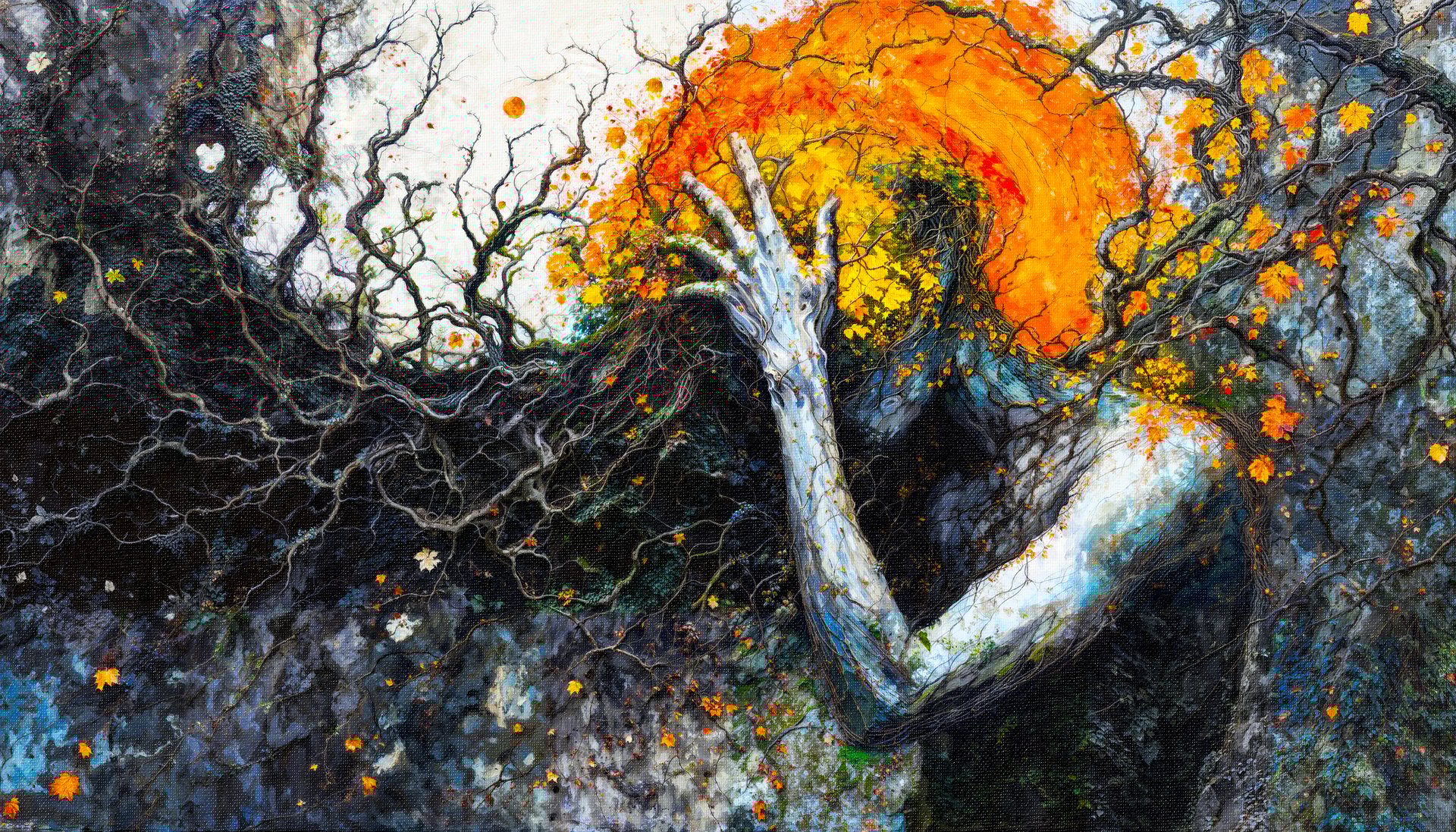
Life tilts when inner forces pull apart.
Sudesa - An art with concepts that inspire.
The main idea of this work is the fragile balance between a person’s inner strength and the pressures of modern life. The thick, heavy palette‑knife strokes create a dense and disrupted environment, symbolizing the emotional and socioeconomic weight people carry today. The rough, uneven texture of the paint reflects how our lives are shredded by both our inner feelings and the outside world.
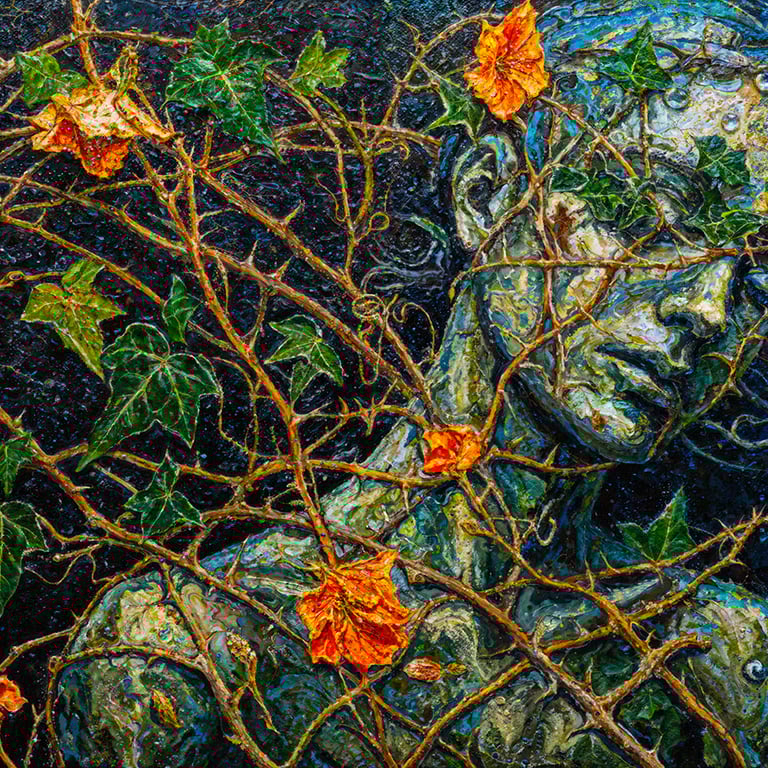
The painting feels raw and deeply human. Each palette‑knife stroke cuts emotion into the surface. The thick oil paint forms ridges and dips that catch the light, almost like ivy shining with morning dew. The image is not smooth or polished—it is rough, layered, and purposefully imperfect, echoing the complexity of the subject’s inner struggle.
The face appears only partly through the thick ivy, as if the person is both growing with it and caught inside it. Palette‑knife marks cut sharp lines along the cheekbones, while softer strokes blur around the eyes.
Thick impasto builds up where the vines cross the skin, adding weight and texture.
The expression is unclear—somewhere between giving in and holding on.
The mix of skin tones with greens and browns makes it feel like the person is being taken over by the very vines they once cared for.
It becomes easier to see why this imbalance happens when we look at passion, virtue, social desire, and commitment as parts of the same picture. They aren’t separate ideas—they’re like different layers in a painting that shape who we are and how we choose. Each one highlights a different side of being human, and depending on how we handle them, they can either bring harmony to our lives or create tension.
The figure becomes a symbol of someone weighed down by their own passion, virtue, social goals, and commitments—the vines acting like responsibilities that once offered support but now tighten around them.
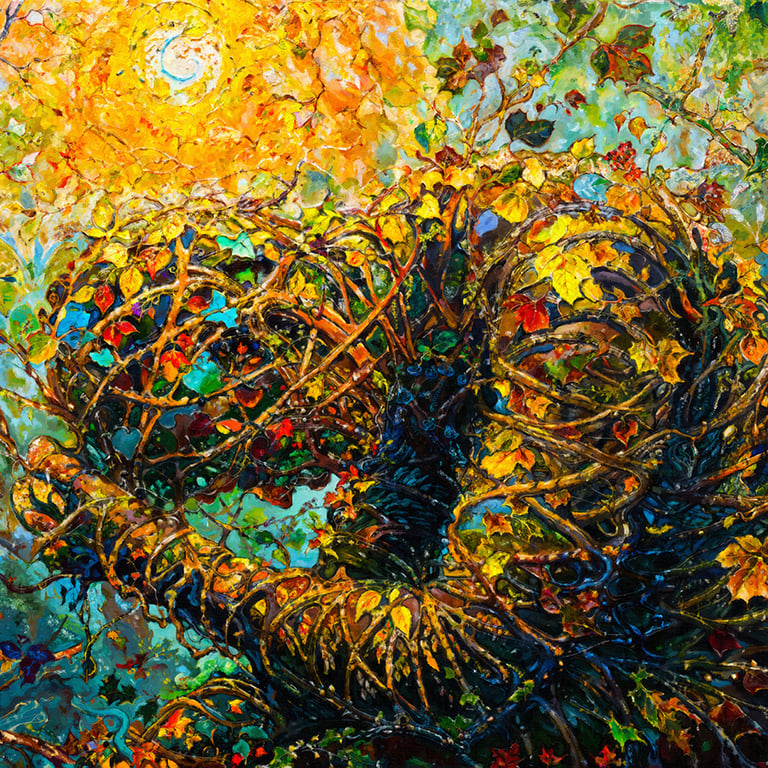
The vines are built with thick, twisting strokes, layered so heavily they create small shadows on the canvas.
They coil around neck in a way that feels natural but also suffocating.
Palette‑knife work adds sharp, rough textures, giving the vines a bark‑like surface.
Their tangled form represents the complicated duties and ideals that shape a person’s life—and sometimes overwhelm it
The painting core, ultimately stands as a reminder of how easily strength can turn into strain when life’s many demands grow too heavy. Through its thick textures, tangled vines, and half‑emerging figure, the work captures the quiet tension between who we are and what the world asks of us. It shows that the struggle for balance is not a flaw but a deeply human experience—one marked by resilience, vulnerability, and the constant effort to stay rooted while still trying to grow.
Even within this tangled scene, there is a quiet reminder that struggle is not the end of the story. Just as paint can be reshaped with each new stroke, our lives can shift when we choose patience, clarity, and self‑care. The vines may tighten, but they also show that growth is still happening beneath the weight.
By recognizing our limits, loosening what no longer serves us, and tending to what truly matters, we can find space to breathe again.
The painting suggests that balance is not a fixed state but something we rebuild—slowly, bravely, and with the same resilience that keeps the figure emerging from the ivy.
Life loses balance when inner forces pull us in opposing directions.
Life cracks open when expression, integrity, expectations, and responsibility collide instead of creating shared harmony.
Contact
Email : INFO@SUDESA.CO.IN
Call : +64 800 121 141
© 2026. Design & Developed by SUDESA
From initial digital strokes to final details, each piece evolves into a complete digital artwork.